How Often Should Gutters Be Cleaned? It Depends on Your Property

By Birdmuck & Moss Ltd

How often should gutters be cleaned?
A useful cleaning interval is not simply a date on the calendar. It depends on how much debris reaches the gutters, how easily the system carries it away and whether the property has a history of blockages. Two neighbouring houses can need different attention, even when their gutters look similar from the street.
That is why a sensible decision starts with the property itself. At Birdmuck & Moss Ltd, we work across Alfreton and surrounding Derbyshire and Nottinghamshire areas, where homes range from older terraces to modern builds. The roofline, nearby planting and drainage layout all affect how often a clearance may be needed.
Start with what is collecting in the gutter
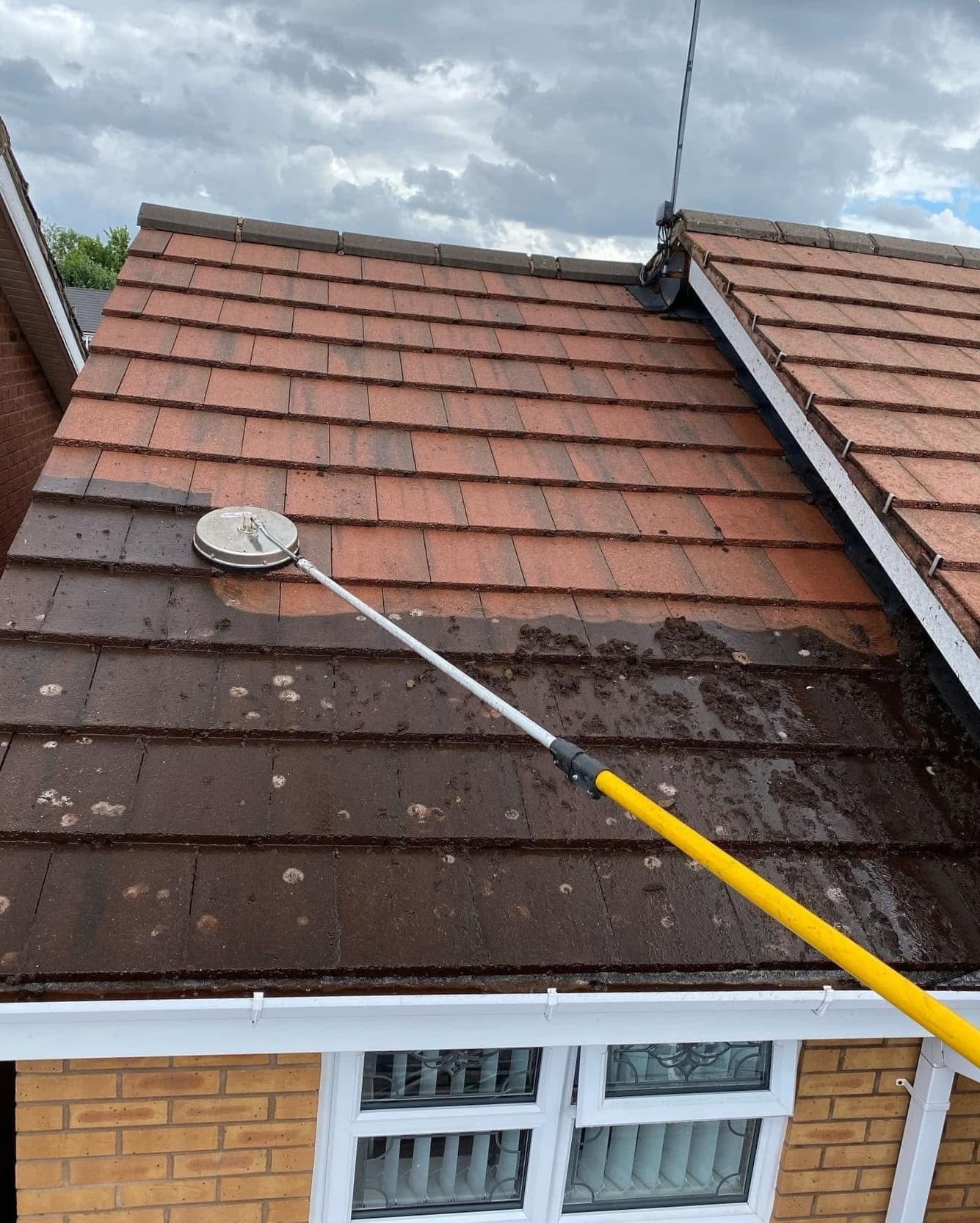
Leaves are an obvious cause of blockages, but they are not the only material to consider. Moss can loosen from roof coverings and collect around the openings leading into downpipes or at bends. Small twigs, seed cases and other airborne debris can also accumulate, particularly where roof sections meet or where an outlet is narrow.
The source matters because it indicates whether the problem is likely to return quickly. A gutter beneath overhanging branches may receive fresh leaves and fine debris directly. A roof with moss shedding into the gutter may keep adding material even when there are few trees nearby. If the debris is concentrated around one outlet, the layout or the outlet itself may be contributing to the restriction.
When considering frequency, look beyond the visible amount of debris in the front of the gutter. Material can settle near the opening where water enters a downpipe, or inside the downpipe, without being easy to spot from ground level. A gutter that appears clear along most of its length can still drain poorly if a small amount has gathered at the point where water needs to leave the system.
Roof shape and drainage layout make a difference
The amount of roof area draining into one section of gutter affects how much water and debris it must carry. A long section of gutter, several roof sections feeding one area, or a point where different sections meet can concentrate water and debris. The channels where two roof slopes meet, and changes in roof direction, may also direct material towards one part of the gutter rather than spreading it evenly.
Downpipes are part of the same system. A clear-looking gutter does not tell you whether water can pass through the outlet and downpipe. If a restriction forms there, debris and water may back up into the gutter. Repeated overflow in one location is therefore different from a general build-up along the full gutter: it can point to a local blockage, a drainage issue or a problem with how the gutter carries water.
The surrounding property can affect access and inspection too. Extensions, conservatories and changes in ground level may make some sections harder to see from outside. That does not automatically mean they need cleaning more often, but it can make regular, safe checks more important because a problem may otherwise go unnoticed.
Use repeat problems as evidence
A one-off blockage does not necessarily mean the whole system needs frequent cleaning. Note where it occurred, what material was present and whether the same section causes trouble again. If the same outlet repeatedly blocks, simply shortening the interval may not address the underlying reason. The gutter may have a local build-up point, the downpipe may be restricted, or water may not be moving towards the outlet properly.
Look for clues from the ground: water spilling over during rain, staining below the gutter line, damp patches near the top of an outside wall, or debris visible around an outlet. These signs can help you describe the issue, but they do not establish its cause. Water marks can have more than one source, so avoid assuming that a gutter blockage is responsible without checking the wider roof and drainage area.
Do not climb a ladder or lean out of an upstairs window to inspect a gutter. A photograph taken safely from the ground can help you keep track of where a visible overflow or stain appears, but it cannot confirm that a downpipe is clear or that the gutter slopes correctly towards the downpipe.
Set an interval from the evidence
A practical approach is to begin with the condition of your property, then adjust based on what you find at each inspection. Properties with direct tree cover, visible moss debris or a repeated blockage at the same outlet may need more frequent attention than a roofline with little nearby debris and no history of overflow. Where the cause is a fault rather than accumulated material, cleaning more often may not solve it.
Keep a simple note of the affected section and whether the problem returns after it has been cleared. That record helps distinguish an isolated build-up from a recurring pattern and gives a roofer useful context when assessing the system. For more detail on our service, see Gutter Cleaning.
If you are unsure what is driving an overflow or how often your property needs attention, we can assess the guttering and discuss the next step. A property-specific view is more useful than applying one interval to every roof in Alfreton, Derby or the surrounding area.