Will Roof Cleaning Damage Your Tiles or Slates?
By Birdmuck & Moss Ltd
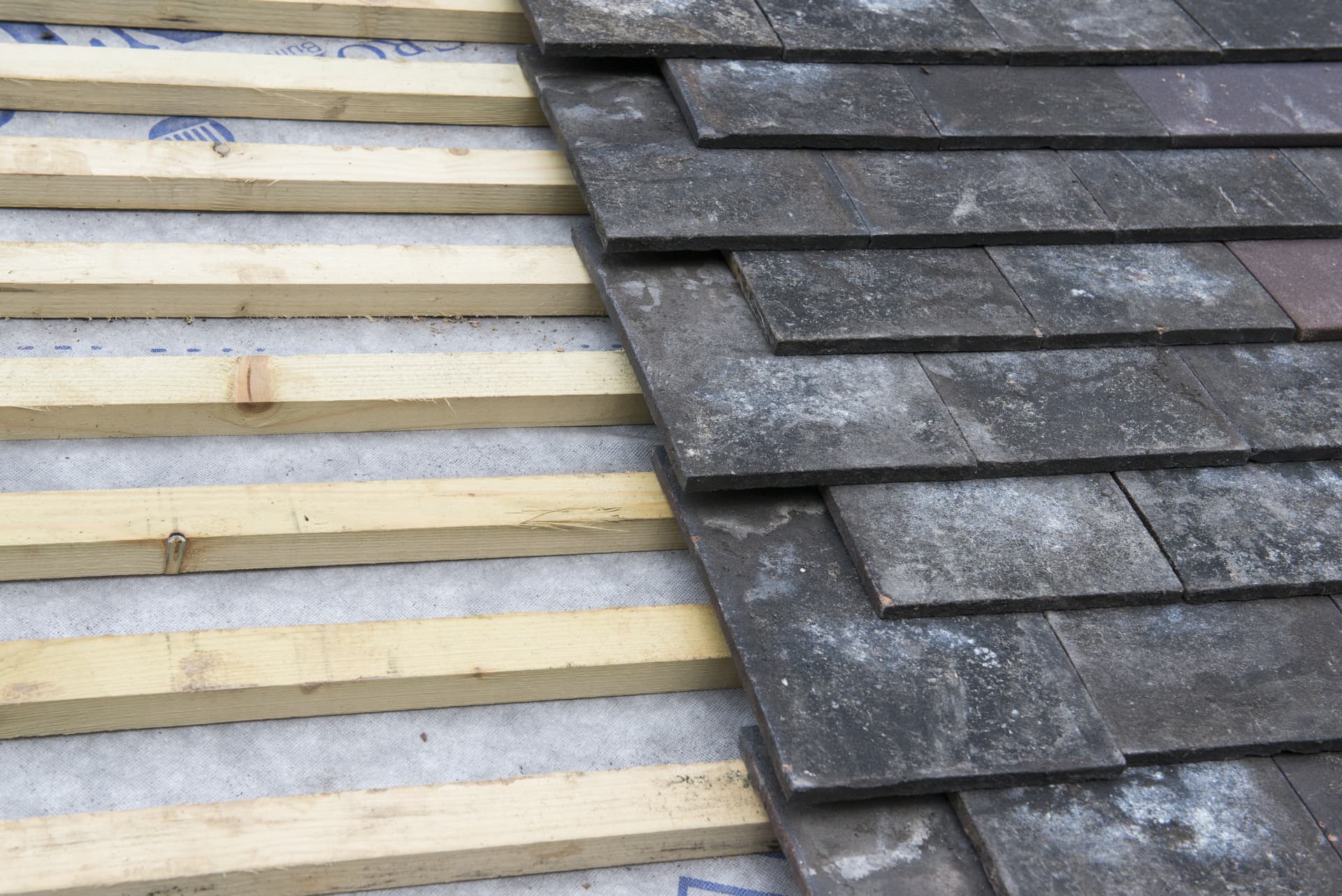
The condition of the roof matters as much as the cleaning method
The risk of damage is not determined by the word "cleaning" alone. It depends on what is already on the roof, what the roof covering is made from, how securely each tile or slate is fixed, and how much wear it has already experienced.
A roof with sound, well-secured tiles can usually be cleaned using controlled methods. A roof with brittle slates, slipped tiles, failing mortar or exposed nails or other fasteners needs a more cautious approach. Cleaning does not create every problem found on an old roof, but it can reveal weaknesses that moss and dirt were hiding.
That is why we inspect the roof before deciding how the work should be carried out. You can read the service overview on our Roof Cleaning page, but the important decision happens at the roof itself.
Why aggressive cleaning can cause problems
Moss is not simply loose dirt sitting on top of the covering. It can hold moisture against the surface and grow around overlaps, edges and fixings. When removed carelessly, it may pull against tiles that are already loose or disturb mortar that has started to fail.
Excessive water pressure creates a different problem. A concentrated jet can drive water into vulnerable overlaps between tiles or slates, dislodge surface material or move a tile out of position. On a tiled roof, the damage may not be obvious from ground level. A tile can remain apparently intact while no longer sitting correctly beneath the course above it.
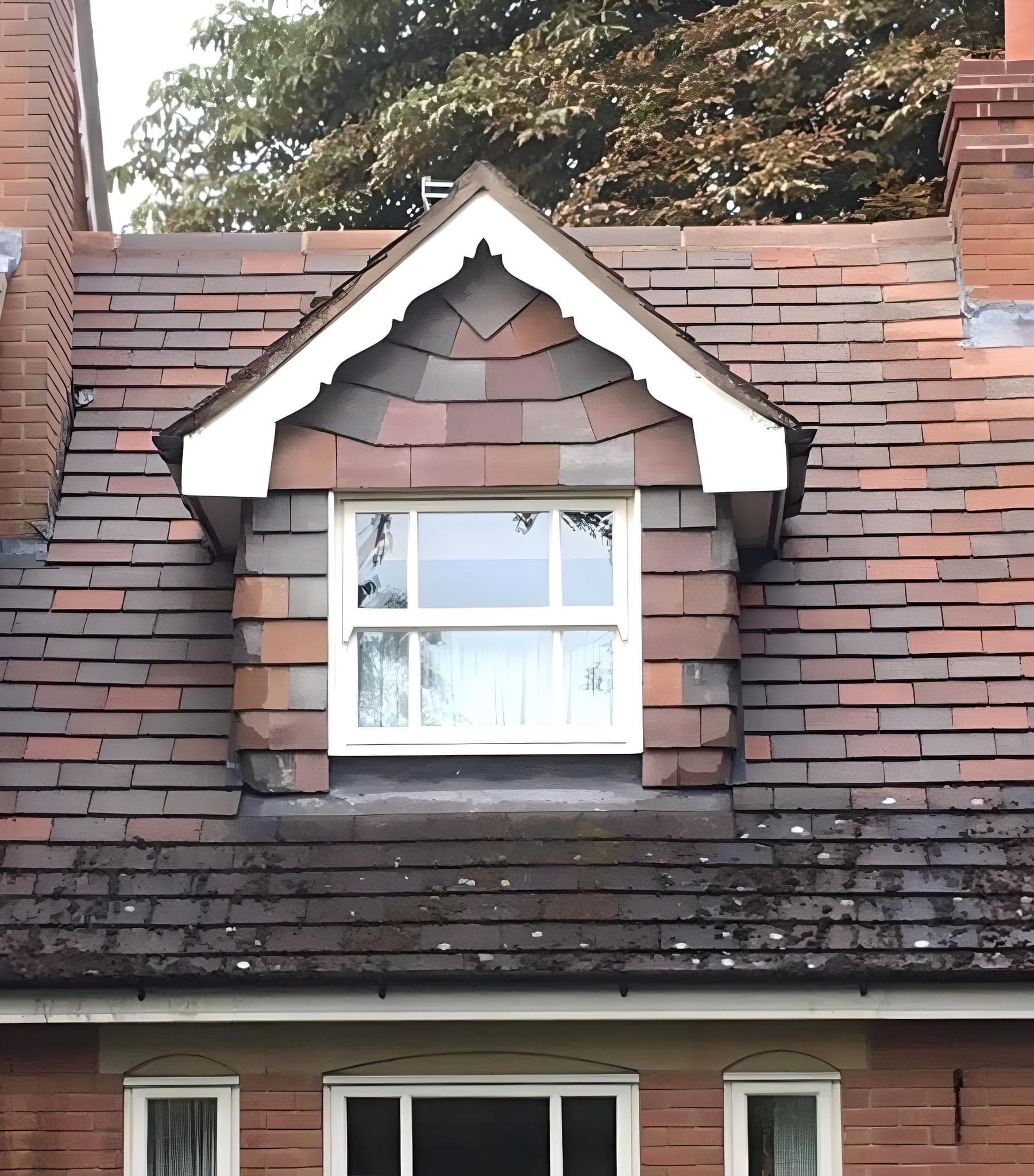
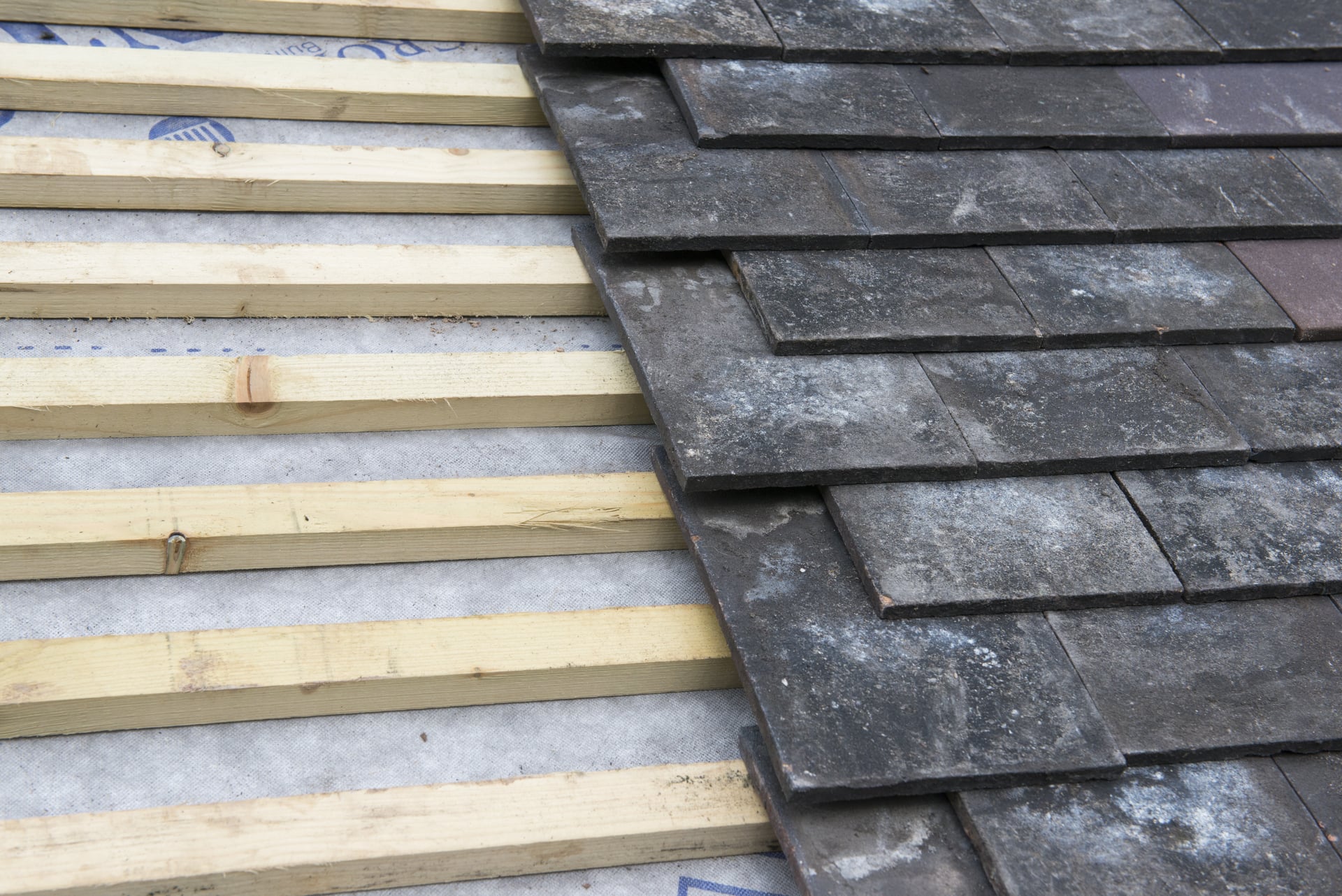
Slates require particular care because they can be thinner and more vulnerable to cracking around nail holes or places where they are attached. The correct approach is not to assume that every roof can tolerate the same pressure, brush or access method. It is to match the process to the covering and its condition.
What we check before cleaning
The roof covering
We look for cracked, chipped or slipped tiles and slates, along with areas where the surface appears unusually weathered. We also check whether moss is concentrated around roof edges, ridges, valleys or points where the roof meets another structure. These locations can indicate more than a cosmetic issue because they also help direct water away from the roof.
Mortar and roof edges
Loose mortar along the ridge, deteriorated mortar at the roof edges and other damaged edges need to be identified before cleaning starts. These parts can be more vulnerable than the main roof surface. If they are disturbed, the result can be movement or water entry rather than a properly cleaned surface.
How we reach the roof
The way a roofer reaches the roof affects the loads placed on the covering. We plan access so that unnecessary pressure is not concentrated on fragile areas. Ladders, roof scaffolding and other access arrangements must be suitable for the building and the roof layout, particularly where there are awkward extensions, conservatories or lower roof sections.
What the cleaning process should look like
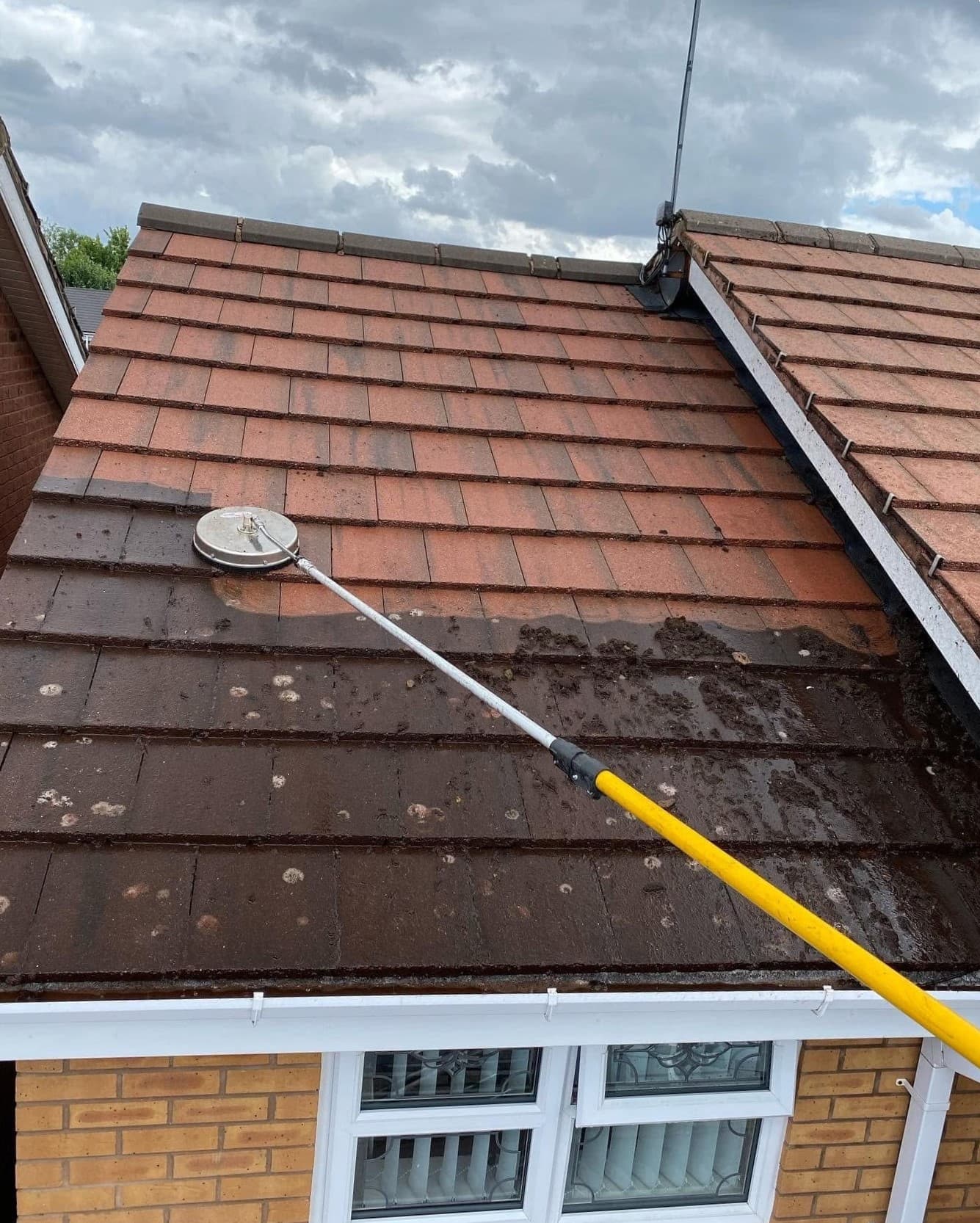
We remove growth in a controlled way rather than treating the roof as a surface that can be blasted clean. Soft-brush work helps lift moss and built-up dirt while limiting force against the tiles or slates. Pressure-managed rinsing is used where appropriate, with the pressure controlled for the material and the roof's condition.
The objective is not to make the strongest possible impact. It is to remove the growth without turning a minor maintenance job into a repair project. We work in sections, watching for movement, exposed defects and material that behaves differently from the surrounding roof. That ongoing assessment matters because a roof can contain more than one type of covering or have localised damage that was not visible from the ground.
If we find a tile or slate that is already fractured or unsafe, cleaning over it would not be responsible. We can identify the repair requirement and discuss replacement or associated roof refurbishment work before that section is completed. The same applies to repointing where failing mortar is part of the problem.
Signs that cleaning has been handled properly
After the work, you should expect the moss and surface staining to be removed without a trail of newly disturbed tiles, damaged roof edges or debris left in the gutters. The roof should be checked from suitable viewpoints, not judged only by how it looks from the driveway.
It is also worth checking that water has been directed into the gutters rather than being left against walls, paths or lower roof sections. Moss removed from the roof can collect in gutters and downpipes, so gutter cleaning may need to form part of the same job where required.
A clean roof is not necessarily a repaired roof. If the inspection identifies slipped coverings, damaged pointing or other defects, those issues should be dealt with separately rather than concealed by the improved appearance.
The sensible way to protect your roof
Avoid choosing a roof cleaner purely on the promise of the fastest visual result. Ask how the method will be adapted for your particular tiles or slates, how fragile areas will be handled and what happens if defects are found during the work.
Here at Birdmuck & Moss Ltd, we assess roofs across Alfreton, Derbyshire and the surrounding Nottinghamshire areas before carrying out roof cleaning. We use our RENOTEC roof coating expertise where a suitable treatment is required, but the first priority is always to clean in a way that respects the roof already covering your home. Contact us for an exterior assessment and a clear recommendation based on your roof's material and condition.